Unprocessed FAQ: Additives, Preservatives, and other Confusing Ingredients

October 10, 2019

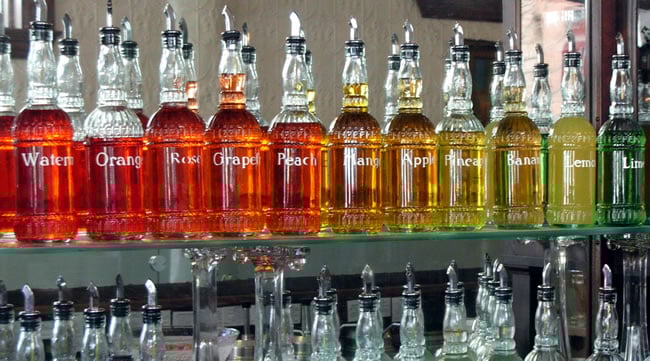
If you haven’t taken the October Unprocessed pledge yet, please do it today. (If you already eat this way all the time, take the pledge and show your support! And if you think it’s too daunting, how about for just two weeks? Or even a day? Do what you can, and take charge of your health!) … We’ve got a lot of momentum together, and this is turning into something really powerful. Keep it up — and tell your friends!
—
When you start reading the ingredient lists for most packaged foods, you’ll see some patterns emerge. I’ve already discussed a few of these in recent posts: Refined flour shows up a lot, and sugar is in nearly everything (often several times under different names, so it appears lower in the list).
Today I want to mention a handful of other ingredients, usually used in small quantities, but collectively, they’re in a whole awful lot of the foods most people eat. Many of these are used in extremely small amounts in any given product, but over time I believe those small quantities can really add up.
Most of these don’t pass the Kitchen Test — but realistically, they’re also fairly trivial ingredients. The “Deliberate Exception Clause” may come into play here: If you think the “pros” of these ingredients outweigh the “cons” (however you define both of those), and want to make a deliberate exception for October, I encourage you to do so…as long as you’re doing it mindfully and in advance (not just because you want that cookie in the moment!).
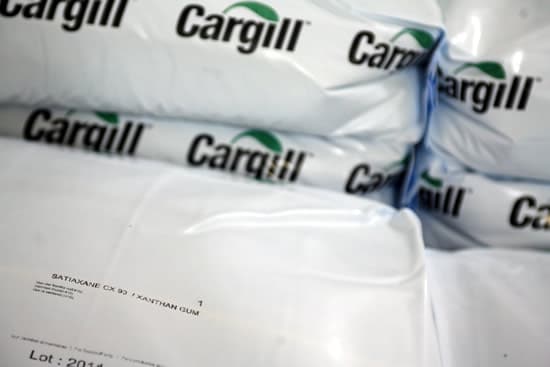
Xanthan Gum & Guar Gum
Xanthan Gum has become one of my biggest pet peeves. You couldn’t make it at home, as it comes from a bacteria that’s been fermented on corn syrup and then extracted (good luck with figuring out how to do that!). It’s often added to liquids because it’s good for texture — it acts as an emulsifier, but it also “relaxes” when it’s under a sheer force. That’s why you’ll find it in salad dressings and sauces — it helps keep the dressing mixed together, but when you squeeze the bottle, it relaxes to let you drizzle the dressing on top. But it seems to have made its way into so many products, that I just want to scream every time I see it on the label.
To be fair, Xanthan Gum is not necessarily harmful (though it can give some people gas and bloating), and if you’re gluten-free it can be a helpful ingredient in your baked goods.
Guar Gum, on the other hand, is made from guar beans that are dried, hulled, and ground to a fine powder. I’m pretty sure that could be done in a home kitchen. Although it may give you gas too, strictly speaking I think it passes the kitchen test.
For more on gums, check out Dr. Jean Layton’s guest post on Xanthan Gum, Guar Gum, and Methyl Cellulose.
Natural & Artificial Flavors
Okay, this is my other big pet peeve. “Artificial Flavors” obviously don’t pass the kitchen test. But “Natural Flavors” don’t, either! That’s because “Natural Flavors” are likely made with a variety of unnatural chemical processes, too. All that’s really required to earn the “natural” label is that the initial product they start with has to be edible.
Now, it’s possible that the “Natural Flavor” is something as benign as lemon zest (some companies may call it “flavor,” so as to protect their recipe). But we have no way of knowing. So we have to assume any “Natural Flavor” is made in a lab, and that it’s no better than the artificial kind.
For more on this, check out Erin Coates, RD, LD’s guest post on Natural & Artificial Flavors.
Soy Lecithin
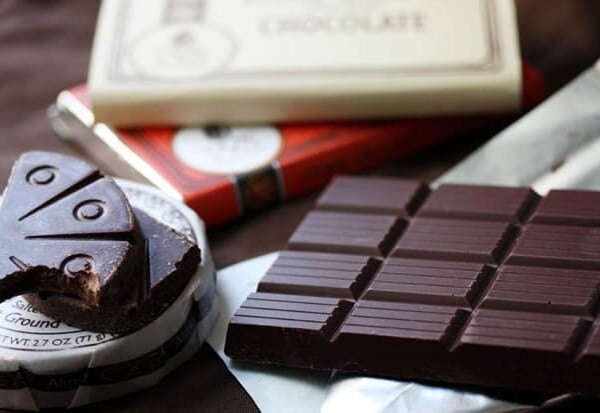
Also incredibly common in processed foods these days, soy lecithin is something you couldn’t make at home. It’s commonly used as an emulsifier in foods to keep things in suspension. You’ll see it in most commercial chocolate bars, too, since it helps keep the cocoa butter from separating from the cocoa.
The Fooducate blog has a good overview, and the Weston A. Price Foundation goes through it in much more detail (though I find W.A.P. to be a bit on the biased side, so do with this what you will). And here’s the Wikipedia page, which describes it as “highly processed”).
What concerns me most about lecithin is that it also seems to be in everything. It may be just fine for us, and I don’t mean to be alarmist, but when I see it in nearly every packaged product, I grow wary.
Carrageenan
Carrageenan is a “linear sulfated polysaccharide” that is extracted from seaweed. It’s used in foods as a gelling or thickening agent. You’ll find it in most store-bought soy milks and nut milks (and a bit more famously in toothpaste). Although it’s been used since about 600 BC in China, modern Carrageenan is usually produced in a way that wouldn’t pass the kitchen test.
The Wikipedia page on carrageenan is surprisingly helpful in walking through the various production methods, and it makes for an interesting read. Personally, I’ve realized that carrageenan upsets my stomach, so I’ve been avoiding it anyway.
Corn Starch
According to my read of Wikipedia, and from previous discussion with readers, you couldn’t really make this at home. For “regular” corn starch, most of the steps you could do at home, but to finally separate everything out, you might need to a hydrocyclone or a centrifuge. To make matters even more confusing, most corn starch used in food manufacturing is “modified.” And modified starches “are prepared by physically, enzymatically, or chemically treating the native starch.” So it sure seems like corn starch doesn’t really pass the kitchen test, either.
Baking Soda & Baking Powder
People have been using baking soda for hundred(s) of years, and although you might need to be a chemist to create it, it is such a basic ingredient — that doesn’t seem to have a downside — that it seems counter-productive to exclude it. Similarly, baking powder is simply baking soda with an added acid.
The pitfall, however, is that many of these add corn starch (usually just to keep it “powdery”). You may want to check out our discussion in the comments section with Tracy, Kirsten, and Xan before making your decision on whether or not to allow these in your diet for October.
Citric Acid & Calcium Chloride
These are ones that you’re going to have to decide for yourself. I actually keep both Citric Acid and Calcium Chloride in my house, to use when making cheese.
Citric Acid has been around a very long time, though the way it’s produced commercially today it wouldn’t pass the kitchen test.
Strictly speaking, you could make your own calcium chloride at home with limestone (or chalk) and hydrochloric or muriatic acid (!). Of course, you’re not likely to be doing that, and I daresay that doesn’t pass the “reasonable skill” threshold. Having said that, it’s also just a salt and is not particularly problematic from what I can tell.
Personally, I go with the spirit of the challenge on this one rather than the letter. I choose to make both of these a deliberate exception, but only if they’re in foods that I consider healthy and that otherwise pass the kitchen test (in a can of beans or a block of tofu, for example).
Lactic Acid
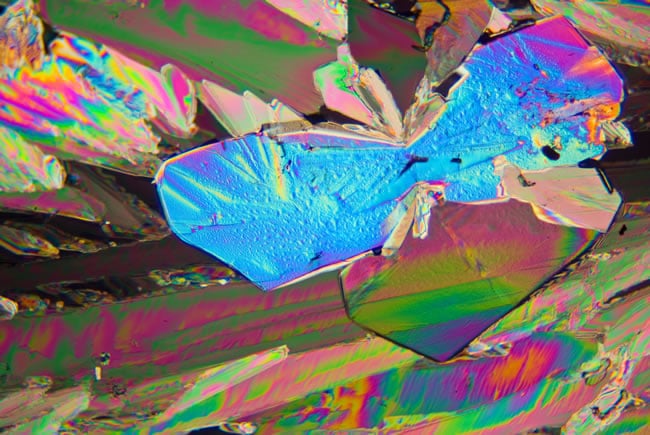
Refining lactic acid goes back to 1780, when it was first cultured from sour milk. I think Lactic Acid is probably fine — though it depends on how strict you want to be, and how they actually made it. I just found this tutorial on how to culture it at home (though she also says she doesn’t consume it herself – just uses it in her animal feed and around the barn to control odors).
So this is one more where I’ll leave it to you to decide for yourself.
Yeast
We’ve been using yeast for thousands of years, and I’m convinced I could cultivate my own yeast at home, so that answers that. (Not that I would be terribly successful at it, mind you.)
Food Dyes/Colors
If it’s got an official number bestowed upon it by the government, it’s obviously not going to pass the test. There are however, many truly natural dyes that can be used, such as beet juice, so those would pass muster. (Annatto is another that is probably okay – depending on the extraction method, which, of course, won’t be on the label.)
Preservatives
Most preservatives aren’t going to pass the test, of course. Sadly, almost every packaged food these days will include preservatives. Even hot sauces like Huy Fong’s Sriracha (the popular one with the Rooster on the bottle) — which are highly acidic so probably don’t really need them– are using them because it extends shelf life just a little bit more. (If you’re a hot sauce addict, you may be relieved to know that Original Tabasco will pass the kitchen test. Its ingredients are just vinegar, red pepper, and salt.)
—
With so many ingredients out there, I’m sure I missed a bunch. If you have questions — or want to add (or correct!) anything I’ve said above — please chime in with a comment!
If you haven't taken the October Unprocessed pledge yet, please do! And then encourage your friends to join in -- it's a lot more fun that way!
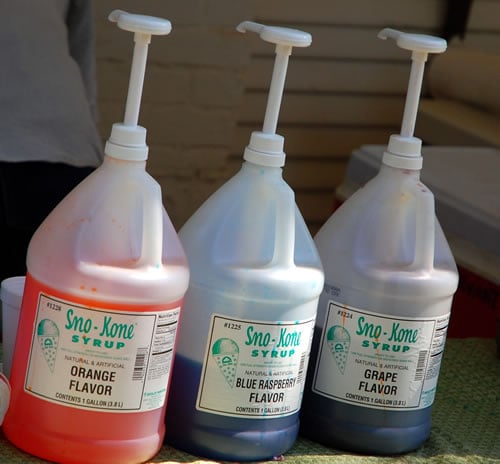
“Sno-Kone Syrups” ©2011 by Steve Snodgrass
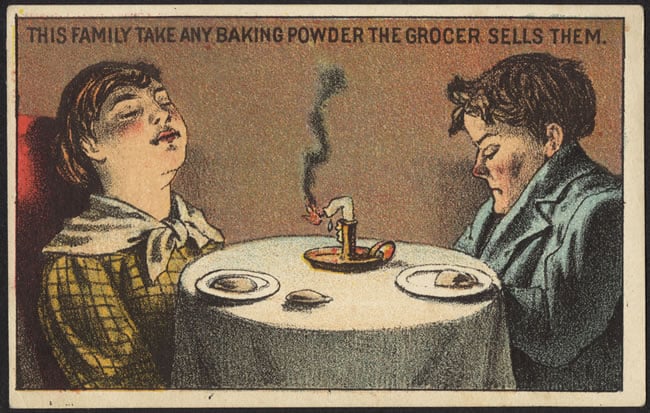
“This family take any baking powder the grocer sells them” via Boston Public Library, 2012
“Citric Acid” ©2007 by Jasper Nance

















I found out August 2021 I was allergic to Preservatives (I was literally dying from allergies ) and that our bodies cannot process chemicals in most of our food. My body decided to reject man-made chemicals that was not natural (not what God intended us to eat is how Dr. Memon described it). In only two and a half to three months I have lost over 30 pounds from eating nothing with preservatives.I only use yest,baking powder, baking soda, unbleached flour, fresh fruit fresh, vegetables and I check fresh meat because they add Preservatives to it and it’s best to read it before you buy it because what you’re buying may have preservatives (chemicals)added into the fresh meat to keep it from discoloring.
I have noticed not as many articles or recipes this year.
Citric acid is likely made from genetically modified corn, as I understand it. Dr, Richard Blaylock also names it as a neurotoxin. So, I avoid it 99% of the time in my food choices.
Do you have any suggestions for an unprocessed baking soda??
Thanks for a great article. Didn’t realize baking powder (and baking soda?) were not grain-free. I would guess the vinegar in Tabasco is also not; I wonder whether it’s gluten-free?
I didn’t realize that there were so many questionable additives in our food! I’m definitely going to be cutting these out or cutting back on them in my diet for October!
Any thoughts on nutritional yeast? As a vegan household we go through a lot of it. I don’t think it’s produced the same way as standard yeast.
Coconut oil? Olive oil? Can I use them? I’m in, we eat healthy anyways, but this is an I opener.