How To Make Peanut Butter

Last Updated July 2, 2019 · First Published October 3, 2018
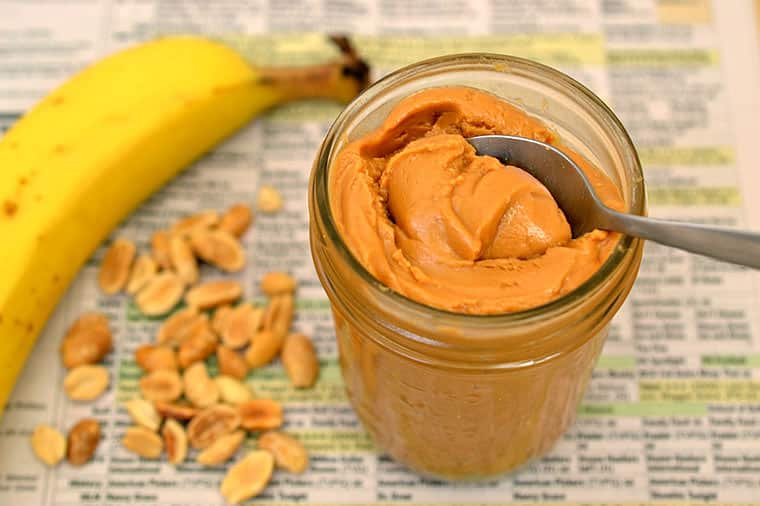
Peanut butter is a tasty, cheap, and easy source of protein for both kids and adults alike. But for a food that’s essentially just pureed peanuts, there can be any number of food products at the supermarket that all call themselves “peanut butter.” The spectrum ranges from the most raw peanut butter (made from peanuts alone) that can be extremely coarse and chunky, to highly processed peanut butter (made with hydrogenated oils and sugar) that spreads like margarine.
Of course, given that this is October Unprocessed, you probably know where this is going. Pure ingredients = Good. Hydrogenated oils = Bad. But even if your palate has been trained to love margarine-smooth processed peanut butter, there’s still hope. It is unbelievably easy to make your own peanut butter at home – even the smooth stuff.
Sure, you might say, but if you’re set on making your own, you can just pour the peanuts into that big machine at the supermarket and grind it there. However, when you use those machines you don’t have any say in the texture or the flavor. If you make it yourself, you can adjust it precisely to your own specifications – smooth, chunky, salty, sweet, or even spicy.
Added bonus: If you make your own, you reduce the risk of salmonella that can come with commercially processed peanut butter. (Here’s how it can get contaminated.)
The ingredient list for a batch of peanut butter is pretty straightforward:
- 2 cups roasted unsalted peanuts
That’s it! Really! You’ll also want to have on hand:
- 2 to 4 tsp. peanut oil (if needed)
- ¼ tsp. salt (if desired)
- 1 tsp. honey or molasses (if desired)
You’ll also need a reasonably powerful food processor. (Don’t burn out your blender on peanuts unless you’re sure the motor can take it.)
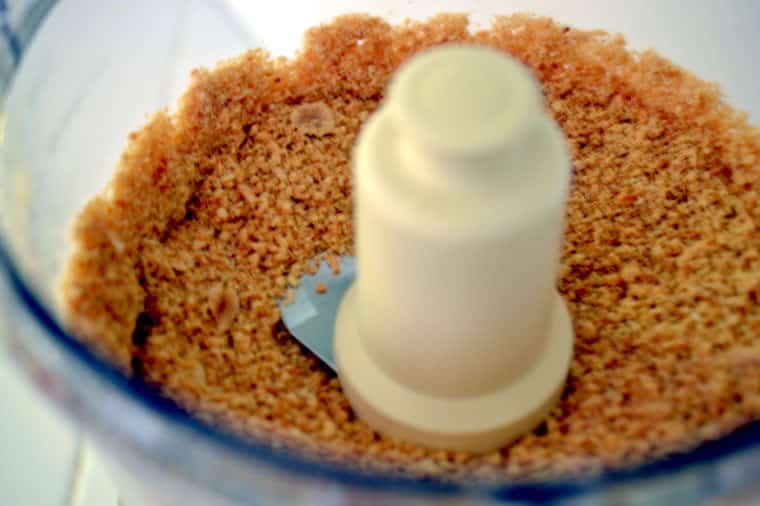
Put the peanuts in the food processor. Process for several minutes. At first it will look like very crumbly.
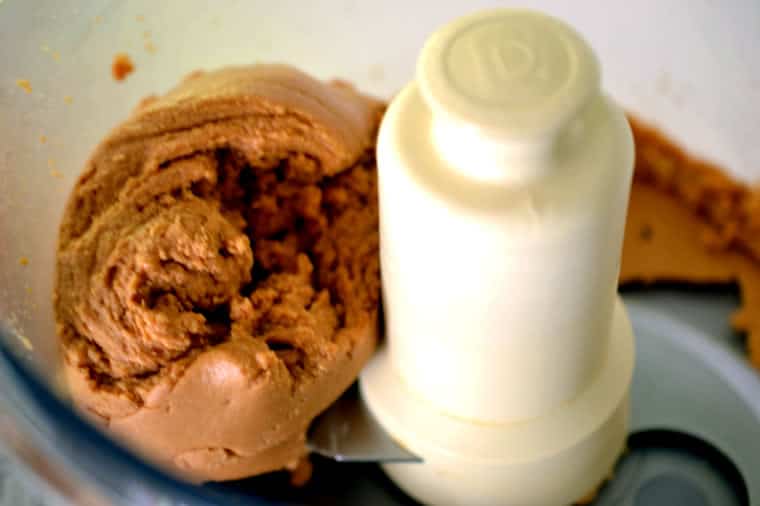
Within about two minutes the magic will start to happen: As the oil is released, the crumbly pieces will start to stick together, and then the peanut butter will clump together in a large ball as it takes on a paste-like consistency. Depending on how fresh the peanuts are, you may need to add oil to keep it smooth. Remember that a little oil goes a long way, so add just 1 teaspoon at a time.Continue scraping down the sides to make sure that all of the paste gets processed.
Add sweetener and/or salt to taste and continue processing until the peanut butter reaches the desired consistency. All told, the processing should take about 5 minutes.
Yields about 1 ½ cups peanut butter.
Place the peanut butter in an airtight container and store it in the refrigerator for up to one month. Keep in mind that the oil tends to separate, so you may need to stir it up before you serve and eat it.
Want to customize it? Easy! Here are some add-ins to consider: Cinnamon, nutmeg, vanilla extract, cocoa powder, or even red pepper. Stir in extras like raisins or dried cherries, or try it with other nuts like cashews or almonds. The only limit is your imagination – after all; it’s your peanut butter.
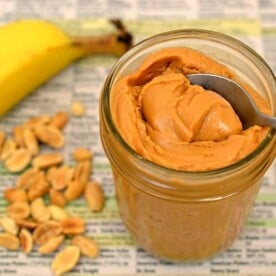
Homemade Creamy Peanut Butter
Ingredients
- 2 cups roasted, unsalted peanuts
Optional
- 2-4 teaspoons peanut oil, if needed
- 1/4 teaspoon salt, if desired
- 1 teaspoon honey or molasses, if desired
Instructions
- Put the peanuts in the food processor. Process for several minutes. At first it will look like very crumbly.
- Continue processing. As the oil is released, the crumbly pieces will start to stick together, and then the peanut butter will clump together in a large ball as it takes on a paste-like consistency. Add oil if needed to keep it smooth, 1 teaspoon at a time.
- Add sweetener and/or salt to taste and continue processing until the peanut butter reaches the desired consistency.
Nutrition

Jeanne Fratello writes The Jolly Tomato, a blog with news, information, and recipes geared toward healthy kids’ eating. She also has a “Real Food” series, where she toured farms and factories to learn more about how commonly used foods are made and processed. Find her on Twitter, Facebook, and Pinterest, and Instagram.

















Hello Andrew and Jeanne, I just wanted to say that the homemade creamy peanut butter is amazing. It’s better to make peanut butter at home instead of buying peanut butter from the grocery store!
Just 3 ingredients? Seriously, this looks like such an easy recipe. Think I just found my new go to snack! Check the Veeba Peanut Butter http://veeba.in/product/peanut-butter-creamy-340-gm/
I have tried many times to make peanut butter in a blender. No matter how long it is mixed, even on “puree” it is coarse, not creamy smooth. It requires a two-roll mill. I had one from my mother-in-law some years ago, and it took a while to make any quantity because the feed throat was very small, but the results were completely smooth, not chunky like the processor makes. I lost the darn thing and can’t seem to find another on line, but I mean to keep on looking. A mill is what’s needed, not spinning blades.
would i need oil if i just went and picked up the peanuts from the field 3 days ago (took a while cause of shelling and roasting)