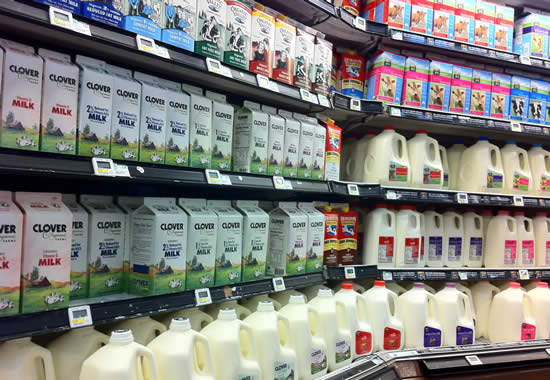
For the sake of this particular discussion, let’s assume you’re not asking whether or not you should drink milk at all, just that you are a generally healthy adult who likes to drink milk, and you’re wondering about which particular type of cow’s milk is the best way to go.
Continue Reading →Erin Coates, RD, LD, writes about the importance of staying healthy through the foods we eat at The Healthy Apron, sharing delicious recipes along with diet and fitness information. I’ve asked her to write about Natural and Artificial Flavors, those ubiquitous and vaguely-defined ingredients that seem to be in almost every processed food.
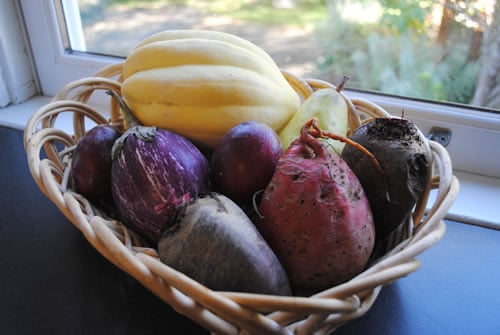
Continue Reading →Amy Holan is the author of Seasonally Seattle, a blog about eating within a 250 mile radius of the Seattle area for an entire year — on a budget. As part of her project, she’s been researching Heirloom varieties of fruits and vegetables, and today she shares some of what she’s learned.
Continue Reading →The Environmental Working Group ranks 49 fruits and vegetables according to pesticide content (retained in the food itself, not necessarily how much is actually used in production).
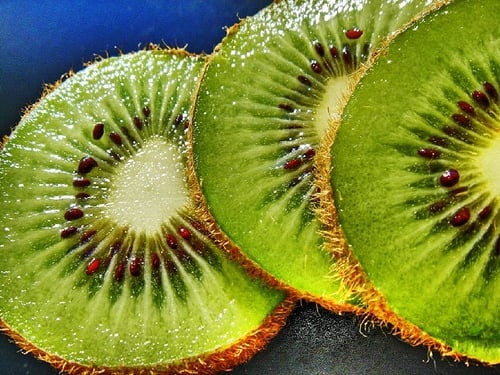
Continue Reading →The kiwi fruit skin is much softer than you’d think, and contains lots of fiber and nutrients.
Continue Reading →If you want to feel full faster for longer, eat balanced meals that contain protein, unsaturated fats, and whole grains.
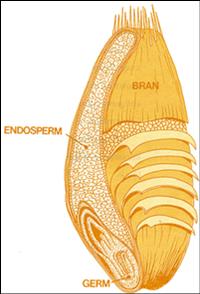
Continue Reading →It’s pretty straightforward, really. A whole grain kernel — or seed — is composed of three parts: the bran, the endosperm, and the germ.
Continue Reading →The food industry* spends more than $33 Billion — with a B — each year on advertising and promotion. In contrast, the National Cancer Institute spends $1 million a year to promote fruits & veggies. Surely, the NCI isn’t the only one on our side, but still… this imbalance paints a clear picture of what we’re up against. Source: Nutrition: Concepts and Controversies, p.438. Image found in a rather roundabout way from this MySpace page. Continue Reading →
Continue Reading →